
The Massachusetts Department of Public Health (DPH) announced that laboratory testing has confirmed two new cases of the Eastern Equine Encephalitis (EEE) virus infection. A woman in her 60s from eastern Worcester County and a female under the age of 18 from southwestern Middlesex County have tested positively for the disease. This brings the total number of human cases of EEE to 7 this year in Massachusetts.
As a result, the risk level in Framingham, Marlborough, Northborough, and Sudbury has been raised to critical and the risk level in Berlin, Boylston, Hudson, Maynard, Stow, and Wayland has been raised to high. In total, there are 36 communities now at critical risk, 42 at high risk, and 115 at moderate risk for the EEE virus in Massachusetts. A map of the state’s current EEE risk levels can be found here.
EEE is a rare but serious and potentially fatal disease that can affect people of all ages. All residents throughout the Commonwealth should continue to use mosquito repellent and those in high and critical risk communities should consider staying indoors during the dusk to dawn hours to reduce exposure to mosquitoes.
DPH urges residents to remain vigilant in reducing potential exposure to mosquitoes. For the most up-to-date information, Q&As, and downloadable fact sheets in multiple languages visit the DPH webpage https://www.mass.gov/guides/eee-in-massachusetts.
Saturday, September 7, 2019
Friday, September 6, 2019
Merrimack River Beach Alliance: Working Together
Today's meeting of the MRBA at PITA Hall in Newbury was very well attended and that was important given the significance of the agenda topics.
We had extensive input from the U.S. Army Corps of Engineers on - Federal Dredge Project Updates, Ongoing or Proposed Actions Chart, Maps of Beach Placements and Disposal Sites, There was also a recap of the Woods Hole Group Dredge Study, and discussions on the Parking Lot at Plum Island Point, Reservation Terrace Fall Nourishment, and a Beach Sand Harvesting Update.
Senator Diana DiZoglio Representative Lenny Mirra, Representative James Kelcourse and a representative of Congressman Moulton's office gave legislative updates on a host of matters including Combined Sewerage Overflow bills.
Attendees and Agencies Represented Also Included: Newburyport, Massachusetts Mayor Donna Holaday, Newburyport City Councilors, Newbury Selectmen, Federal Agencies including the United States Coast Guard, the United States Army Corps of Engineers, the United States Fish and Wildlife Services.
Also participating were state sponsored entities including the Department of Conservation and Recreation, Coastal Zone Management, and GZA GeoEnvironmental.
Local Agencies Participating: Newburyport Conservation Commission, Non-Government Organizations, Citizens and Local News Outlets.
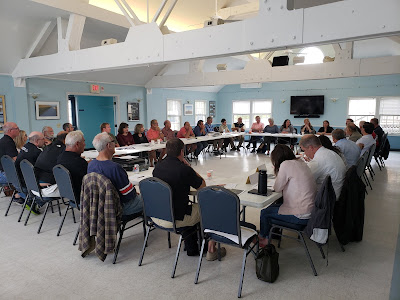
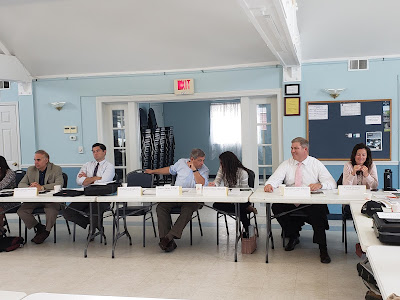
We had extensive input from the U.S. Army Corps of Engineers on - Federal Dredge Project Updates, Ongoing or Proposed Actions Chart, Maps of Beach Placements and Disposal Sites, There was also a recap of the Woods Hole Group Dredge Study, and discussions on the Parking Lot at Plum Island Point, Reservation Terrace Fall Nourishment, and a Beach Sand Harvesting Update.
Senator Diana DiZoglio Representative Lenny Mirra, Representative James Kelcourse and a representative of Congressman Moulton's office gave legislative updates on a host of matters including Combined Sewerage Overflow bills.
Attendees and Agencies Represented Also Included: Newburyport, Massachusetts Mayor Donna Holaday, Newburyport City Councilors, Newbury Selectmen, Federal Agencies including the United States Coast Guard, the United States Army Corps of Engineers, the United States Fish and Wildlife Services.
Also participating were state sponsored entities including the Department of Conservation and Recreation, Coastal Zone Management, and GZA GeoEnvironmental.
Local Agencies Participating: Newburyport Conservation Commission, Non-Government Organizations, Citizens and Local News Outlets.


Read more...

State Public Health Officials Announce 5th Confirmed Human Case of EEE Preventing mosquito bites must remain a priority
BOSTON - The Massachusetts Department of Public Health (DPH) today announced that laboratory testing has confirmed another new case of Eastern Equine Encephalitis (EEE) virus infection, a man in his 70s from southwestern Middlesex County, bringing the total number of human cases of EEE to five this year in Massachusetts. As a result, the risk level in Ashland, Hopedale and Milford has been raised to critical and the risk level in Bellingham, Blackstone and Millville has been raised to high.
In total, there are 32 communities now at critical risk, 39 at high risk, and 121 at moderate risk for the EEE virus in Massachusetts. A map of the state’s current EEE risk levels can be found here.
There have also been nine confirmed cases of EEE this year in animals; eight horses and one goat.
``Even as the weather begins to cool, it remains critically important that people take steps to protect themselves and their families from mosquito bites,” said Public Health Commissioner Monica Bharel, MD, MPH.
All residents throughout the Commonwealth should continue to use mosquito repellent and those in high and critical risk communities should consider staying indoors during the dusk to dawn hours to reduce exposure to mosquitoes. Residents can learn more about EEE and about ways to protect themselves on DPH’s website.
EEE is a rare but serious and potentially fatal disease that can affect people of all ages. EEE occurs sporadically in Massachusetts with the most recent outbreak years occurring from 2004-2006 and 2010-2012. There were 22 human cases of EEE infection during those two outbreak periods with 14 cases occurring among residents of Bristol and Plymouth counties.
EEE virus has been found in 392 mosquito samples this year, many of them from species of mosquitoes capable of spreading the virus to people.
Local communities are continuing truck-mounted spraying for mosquitoes. The Massachusetts Department of Agricultural Resources completed aerial mosquito spraying in parts of Bristol, Plymouth, Middlesex, and Worcester counties last month to help reduce public health risk. Aerial spraying has concluded for the season primarily due to evening temperatures being too low to permit effective aerial application. Spraying for mosquitoes does not eliminate the risk of EEE transmission and the public is asked to continue to follow personal protection practices.
People have an important role to play in protecting themselves and their loved ones from illnesses caused by mosquitoes:
Avoid Mosquito Bites
Apply Insect Repellent when Outdoors. Use a repellent with an EPA-registered ingredient (DEET (N, N-diethyl-m-toluamide), permethrin, picaridin (KBR 3023), oil of lemon eucalyptus [p-methane 3, 8-diol (PMD)] or IR3535) according to the instructions on the product label. DEET products should not be used on infants under two months of age and should be used in concentrations of 30% or less on older children. Oil of lemon eucalyptus should not be used on children under three years of age.
Be Aware of Peak Mosquito Hours. The hours from dusk to dawn are peak biting times for many mosquitoes. Consider rescheduling outdoor activities that occur during evening or early morning in areas of high risk. Clothing Can Help Reduce Mosquito Bites. Wearing long-sleeves, long pants and socks when outdoors will help keep mosquitoes away from your skin.
Mosquito-Proof Your Home
Drain Standing Water. Mosquitoes lay their eggs in standing water. Limit the number of places around your home for mosquitoes to breed by draining or discarding items that hold water. Check rain gutters and drains. Empty unused flowerpots and wading pools and change the water in birdbaths frequently.
Install or Repair Screens. Keep mosquitoes outside by having tightly-fitting screens on all of your windows and doors.
Protect Your Animals
Animal owners should reduce potential mosquito breeding sites on their property by eliminating standing water from containers such as buckets, tires, and wading pools – especially after heavy rains. Water troughs should be flushed out at least once a week during the summer months to reduce mosquitoes near paddock areas. Horse owners should keep horses in indoor stalls at night to reduce their risk of exposure to mosquitoes. Owners should also speak with their veterinarian about mosquito repellents approved for use in animals and vaccinations to prevent WNV and EEE. If an animal is suspected of having WNV or EEE, owners are required to report to DAR, Division of Animal Health by calling 617-626-1795 and to the Department of Public Health (DPH) by calling 617-983-6800.
For the most up-to-date information, Q&As, and downloadable fact sheets in multiple languages visit the DPH webpage https://www.mass.gov/guides/eee-in-massachusetts.
Read more...
MassDOT Advisory: Ipswich-Rowley
Route 1- Roadway Paving
Weekend Work Friday evening, September 6 to Monday morning, September 9
The Massachusetts Department of Transportation (MassDOT) has announced that roadway paving operations will commence on Route 1 (Newburyport Turnpike) both northbound and southbound from the Old Right Road in Ipswich to Haverhill Street (Route 133) in Rowley.
Paving Operations will consist of five consecutive shifts beginning on Friday evening, September 6, at 8:00 p.m. and will be completed by Monday morning, September 9, at 5:00 a.m. The work schedule is as follows:
Shift 1 Old Right Road-Country Club Way (SB) 9/6/19-Fri. 8:00 PM 9/7/19-Sat. 6:00 AM
Shift 2 Old Right Road-Country Club Way (NB) 9/7/19-Sat. 6:30 AM
Shift 3 Country Club Way- Route 133 (SB) 9/7/19-Sat. 7:00 PM 9/8/19-Sun. 6:00 AM
Shift 4 Country Club Way- 320 Turnpike, Rowley (NB) 9/8/19 Sun. 6:30 AM
Shift 5 Route 133 (NB) - 320 Turnpike, Rowley (SB) 9/8/19-Sun. 7:00 PM 9/9/19-Mon 5:00 AM One lane of travel for northbound traffic will remain open at all times. Southbound travel will be detoured as follows: Topsfield/Ipswich Town Line to Linebrook Road. Southbound traffic on Route 1 will be detoured westerly onto Linebrook Road, and using local roads will be directed back to Route 1 by way of Ipswich Road. Linebrook Road. to Haverhill Street (Route 133, Rowley) Southbound traffic on Route 1 will be detoured easterly on to Route 133, and using local roads will be directed back to Route 1 by way of Linebrook Road.
The work is being conducted as part of a $3.8 million project to resurface and perform other related work along approximately 5.5 miles of roadway for this section of Route 1. Police details will be used to direct traffic on Route 1 and the affected intersections along with appropriate signage during the paving operations. Drivers who are traveling through the affected areas should expect delays, reduce speed, and use caution. All scheduled work is weather dependent and subject to change without notice.
Read more...
Wednesday, September 4, 2019
Welcoming Anthony Ansaldi Wenham's Town Administrator
Last night I joined with Representative Brad Hill, local officials and members of the community to welcome new Wenham Town Administrator Anthony Ansaldi. Congratulations Anthony, we all look forward to working with you.


Read more...
Here's The Scoop
Serving up the sweet stuff for the North Andover Council of Aging Ice Cream Social today. A great time was had by all who participated, and it was fun to scoop ice cream with State Senator Diana DiZoglio and Dick Curran my Constituent Services & Community Outreach Coordinator.
I look forward to next year’s social.


I look forward to next year’s social.


Read more...
The Sad Reality of Fetal Opioid Drug Exposure
Recognizing that an increasing number of babies are born addicted to opioids, I wrote and filed a bill, Legislation Relative To Fetal Opioid Drug Exposure, Senate Bill 2297, to help connect these children to essential health services.
Here is a link to a Lawrence Eagle Tribune article published today - Law Maker Seeks Early Intervention For Opioid Babies
Here is a link to a Lawrence Eagle Tribune article published today - Law Maker Seeks Early Intervention For Opioid Babies
Read more...
Subscribe to:
Posts (Atom)
